

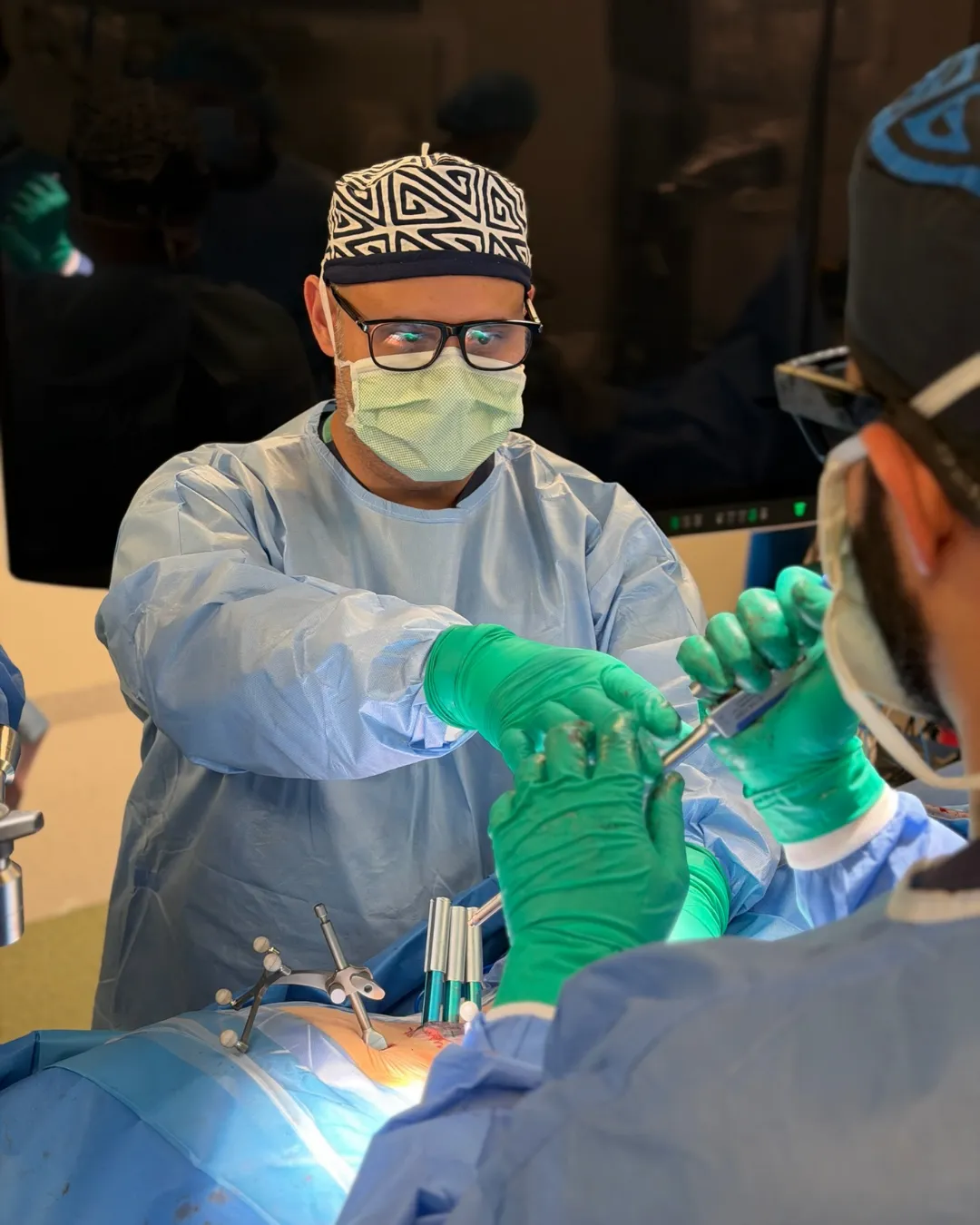
Spondylolisthesis: what it is, grades and when surgery is needed
A slipped vertebra sounds alarming in a report. In practice, many grade I cases never cause trouble.
A characteristic pattern: walking a distance, having to stop, and being able to continue after sitting for a moment.
Lumbar spinal stenosis is the narrowing of the space through which nerves pass in the lower spine. When that space narrows enough, the nerve roots are compressed and symptoms appear.
It is the most common reason for spine surgery in people over 65, and one of the conditions that most limits independence: when walking hurts, everything else shrinks with it.
Less commonly, stenosis is congenital: the person is born with a narrow canal and develops symptoms earlier, sometimes from age 40, with minimal degenerative change.
| Neurogenic (stenosis) | Vascular (arterial) | |
|---|---|---|
| Relief | On sitting or leaning forward | On stopping, even while standing |
| Stationary bike | Well tolerated (flexed position) | Provokes symptoms anyway |
| Walking uphill | Easier than downhill | Harder than downhill |
| Foot pulses | Normal | Reduced or absent |
| Dominant symptom | Numbness, heaviness | Muscle cramping pain |
As throughout spinal pathology: an MRI showing stenosis in a patient without symptoms is not operated on. Radiological narrowing is very common past a certain age.
Lumbar stenosis tends to be a stable or slowly progressive condition rather than one that worsens abruptly. That allows unhurried decisions in most cases.
The most honest criterion is functional, not radiological: is this stopping you living the way you want to live? A patient who can no longer walk with their family, do the shopping or get to work has a reasonable indication, regardless of how many millimetres the canal measures.
Decompression (laminectomy or laminotomy). The bone and thickened ligament compressing the nerves are removed, widening the canal. This is the central goal of surgery.
Decompression plus fixation. Instrumentation with screws is added when there is demonstrated instability, significant spondylolisthesis, deformity, or when the decompression required would leave the segment unstable.
Both are performed today with minimally invasive techniques and intraoperative navigation in most cases, reducing muscle damage and shortening hospital stay.
Decompression works especially well for the leg symptoms: most patients regain walking capacity noticeably. Background low back pain improves less, and less predictably — worth knowing before surgery to avoid disappointment.
Recovery from a simple decompression is relatively quick: walking the same day, discharge in 1–2 days, and progressive return to activity over weeks. When fixation is added the process is longer, because bone fusion must consolidate.
Not necessarily. It tends to be stable or slowly progressive, and many patients remain stable for years with conservative treatment. Abrupt worsening is unusual and warrants reassessment. This means the surgical decision can usually be made without rushing.
Because leaning forward flexes the lumbar spine and opens the canal by a few millimetres — enough to decompress the nerve roots. For the same reason, stationary cycling and walking uphill are better tolerated than standing upright or walking downhill.
Decompression is designed mainly to relieve leg symptoms and restore walking capacity, and it does that well. Background low back pain improves less and less predictably. Having this expectation clear before surgery matters.
No. In many cases a pure decompression is enough, without instrumentation. Screws are added when there is instability demonstrated on dynamic X-rays, significant spondylolisthesis, deformity, or when the required decompression would compromise segment stability.
After a simple decompression, many patients walk the same day, are discharged within one or two days, and resume light activity within a few weeks. If a fusion is added, the process extends over several months while bone consolidates, verified with follow-up imaging.
Written and reviewed by Dr. Ricardo Bermúdez, neurosurgeon. Last reviewed: 2026-09-09.
General informational content. It is not medical advice, does not create a doctor-patient relationship, and must not be used to self-diagnose or to decide on treatment. Outcomes vary from person to person. If you have symptoms, see a doctor.
A slipped vertebra sounds alarming in a report. In practice, many grade I cases never cause trouble.
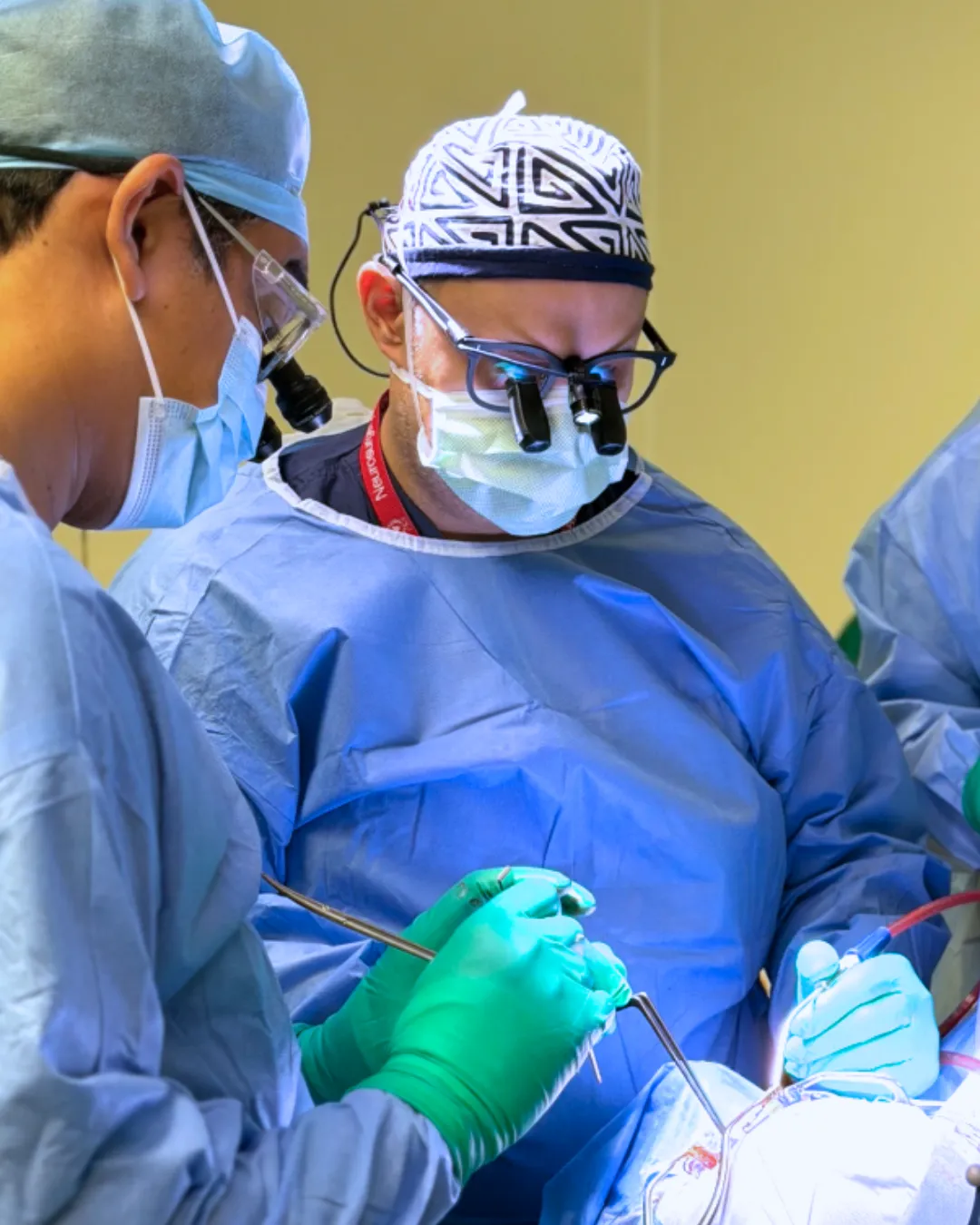
Most sciatica improves without surgery. The difficulty is recognising in time the cases that do not.
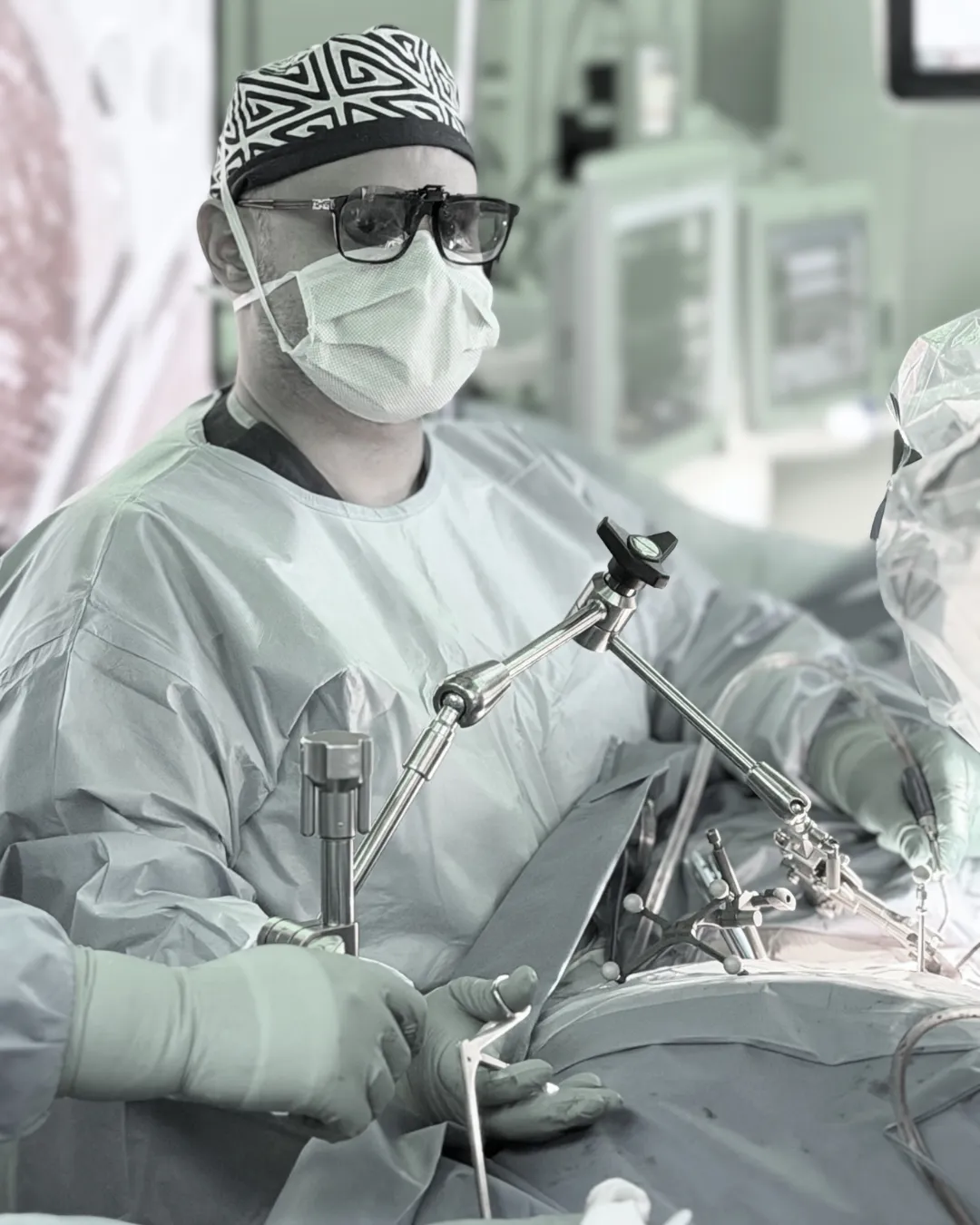
It is not "laser surgery" and it is not risk-free. It is the same operation, performed through a smaller door.