

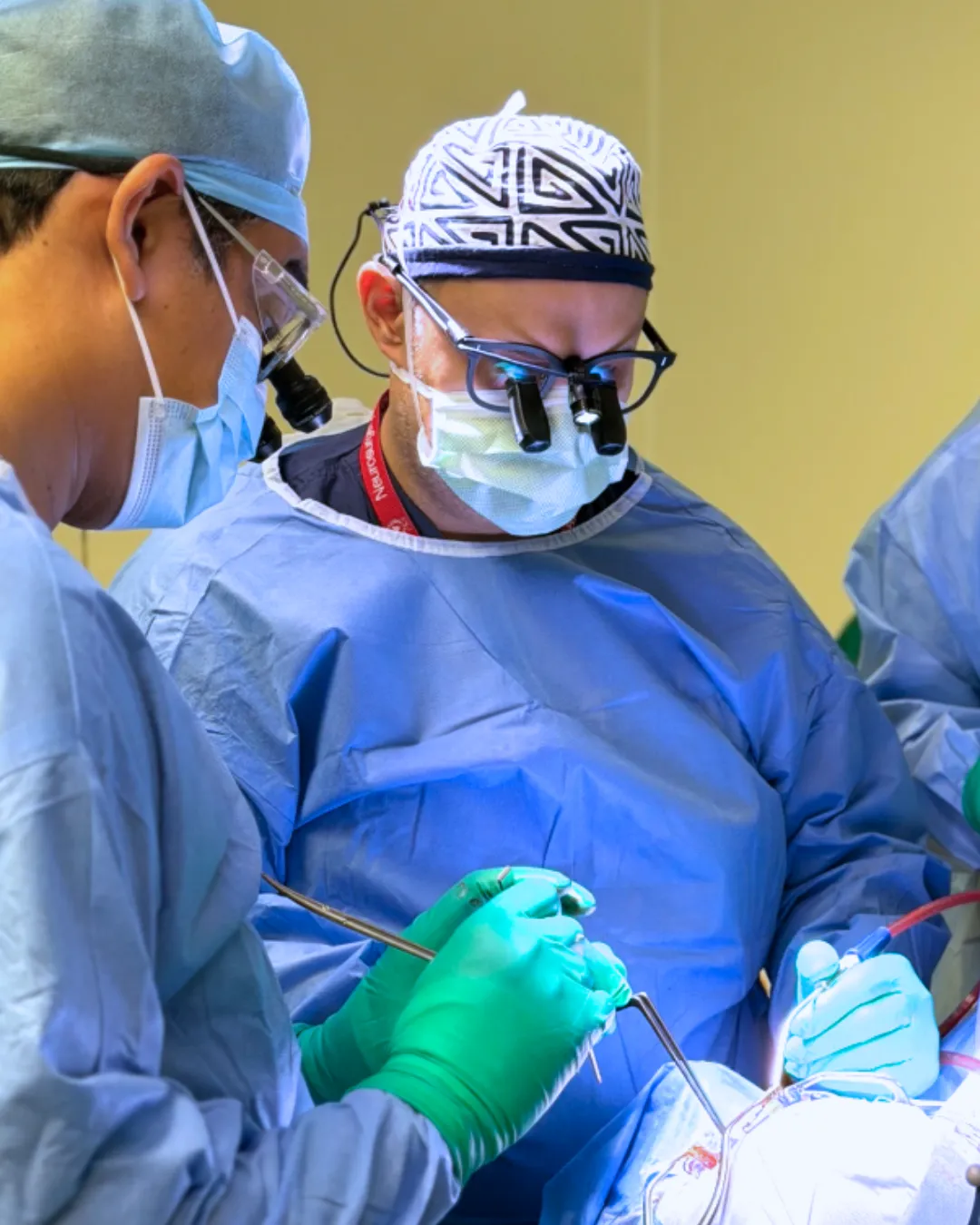
Sciatica: symptoms, causes and when it stops being "just pain"
Most sciatica improves without surgery. The difficulty is recognising in time the cases that do not.
In most low back pain no specific structural cause is identified. And most of it still gets better.
Low back pain is one of the most common reasons for a medical consultation worldwide and a leading cause of time off work. Almost everyone will experience it at least once.
It is also the area where the most misinformation circulates. This article tries to organise what we actually know.
| Low back pain | Radicular pain (sciatica) | |
|---|---|---|
| Where it hurts | Lower back, sometimes buttock | Travels down the leg along a path |
| Type of pain | Dull, mechanical, "heavy" | Burning, shooting, electric |
| Numbness | Rare | Common, in a specific area |
| Usual cause | Muscular, degenerative disc, facet joint | Nerve root compression |
| Surgical? | Rarely | Sometimes, with clear criteria |
Spine surgery works far better for leg pain than for pure back pain. That is one reason a serious neurosurgeon will not simply operate on isolated low back pain. If your pain travels down the leg, see our guide on sciatica.
By far the most common. It involves muscles, ligaments, facet joints and degenerated discs. It worsens with movement and eases with relative rest. There is no single identifiable culprit structure, which is why imaging is usually unhelpful.
The disc loses height and cushioning with age. This is a normal process: finding "dehydrated discs" on an MRI after 40 is as common as finding grey hair. It is not synonymous with disease.
The small posterior joints of the spine develop arthritis, causing pain that worsens on leaning backwards and twisting.
One vertebra slips over another, causing mechanical pain that worsens with prolonged standing. Covered in depth in our article on spondylolisthesis.
Probably not, at least not initially. This is one of the most consistent recommendations in the literature and one of the most frequently ignored.
Ordering imaging for low back pain without red flags in the first weeks does not improve outcomes and creates a problem: an MRI almost always finds something. Protrusions, disc dehydration, facet arthritis — findings that also appear in people with no pain at all.
A good share of these consultations end without surgery, and that is a good outcome. The purpose of the evaluation is to give you a clear diagnosis and a plan — not an operating room.
Typical acute low back pain improves substantially within 2 to 6 weeks. If there has been no improvement at all by 6 weeks with adequate treatment, or if red flags appear at any point — loss of strength, groin numbness, difficulty urinating — it should be investigated without waiting further.
In the absence of red flags, not in the first weeks. An MRI almost always finds degenerative changes that also exist in people without pain, which can lead to unnecessary treatment. It is indicated when there is a neurological deficit, suspicion of a serious cause, or no improvement after correct treatment.
Rarely. Spine surgery works clearly better for leg pain from nerve compression than for isolated back pain. It is considered when there is demonstrated instability, symptomatic stenosis, deformity, fracture, tumour or infection — not for non-specific low back pain.
Not on their own. Disc dehydration is part of normal spinal ageing and appears in most people after 40, many of whom have no pain at all. It is only clinically relevant when it correlates with symptoms and physical examination findings.
The one you can sustain. Evidence does not clearly favour one type over another: walking, swimming, clinical Pilates, core strengthening and hip work all help when done regularly. Consistency and gradual progression matter most, ideally guided by a physiotherapist.
Written and reviewed by Dr. Ricardo Bermúdez, neurosurgeon. Last reviewed: 2026-09-09.
General informational content. It is not medical advice, does not create a doctor-patient relationship, and must not be used to self-diagnose or to decide on treatment. Outcomes vary from person to person. If you have symptoms, see a doctor.
Most sciatica improves without surgery. The difficulty is recognising in time the cases that do not.
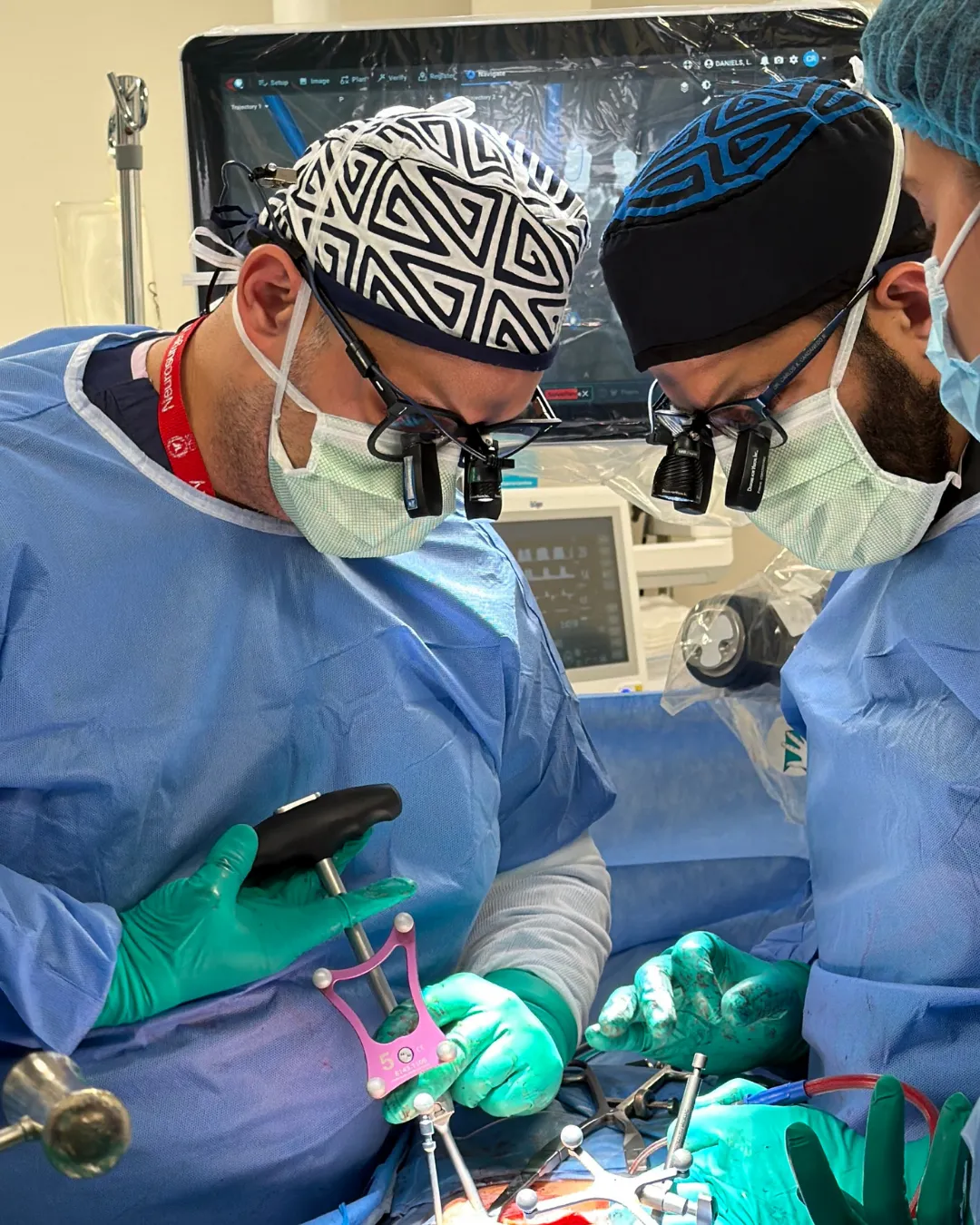
A characteristic pattern: walking a distance, having to stop, and being able to continue after sitting for a moment.
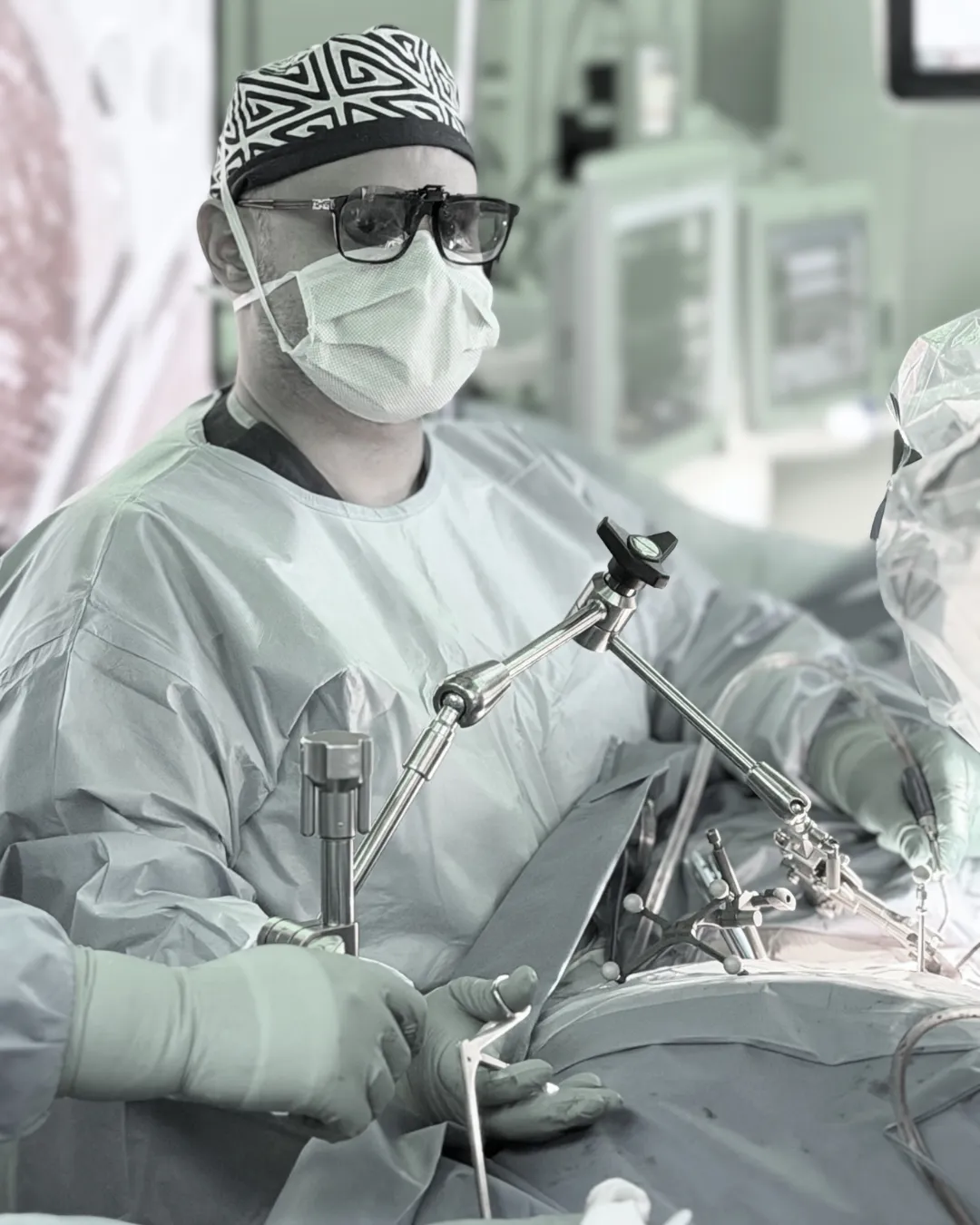
It is not "laser surgery" and it is not risk-free. It is the same operation, performed through a smaller door.